
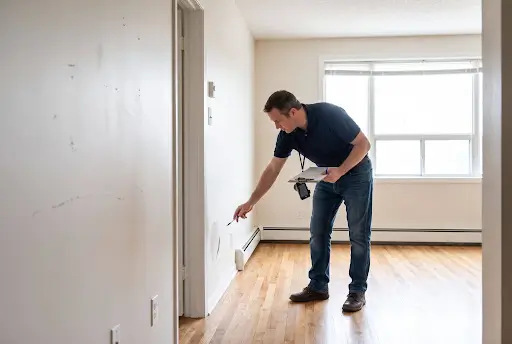
The last tenant moved out. You unlock the door, flip on the lights, and start the walk-through. A faded wall here. A carpet path worn down the hallway. A cracked tile by the tub. A cluster of nail holes where a TV used to hang.
Your first instinct is to start adding it all up. Pause there.
In North Carolina, some of those items are fair deductions. Others are simply the cost of someone living in your home, and charging for them can turn a small repair bill into a deposit dispute you never saw coming.
Here’s how to tell the difference, what the law actually lets you deduct, and how to document every charge so it holds up.
Key Takeaways
Keep these in mind before writing a single deduction.
Wear and tear is off-limits: North Carolina law bars landlords from withholding any part of a deposit for conditions caused by normal wear and tear.
Damage must be real and provable: Deductions are limited to actual damages, so every charge needs a cause, a cost, and documentation behind it.
The clock starts at move-out: An itemized accounting and any refund are due within 30 days after the tenancy ends and the landlord regains possession.
Willful mistakes get expensive: Willfully ignoring the Act's deposit, bond, or notice rules can void your right to keep any of the deposit and may expose you to attorney's fees.
PPA Properties at a Glance |
20+ years: Managing rental properties for landlords in the Durham metro area |
30 days: Deadline to mail or deliver an itemized deposit accounting after move-out and return of possession |
60 days: Outside deadline for a final accounting when damage costs need more time to confirm |
2 months' rent: Maximum security deposit for leases longer than month-to-month |
6 months: How long a landlord must hold a refund balance when the tenant's address is unknown |
IN THIS GUIDE
What North Carolina Law Says About Wear and Tear
Wear and Tear vs. Damage: How to Tell Them Apart
The Gray Areas Behind Most Deposit Disputes
What Durham Landlords Can Legally Deduct
How to Document Deductions That Hold Up
What North Carolina Law Says About Wear and Tear
The rule itself is short, but it carries real weight for every rental in the Triangle.
The Landlord's Limit
Under G.S. 42-52, a landlord may not withhold any part of a security deposit for conditions caused by normal wear and tear. A landlord also cannot keep more than the actual damages.
The statute does not define wear and tear with a checklist, which is exactly why so many disputes happen.
The Tenant's Responsibility
The tenant side of the equation sits in G.S. 42-43. Tenants are responsible for damage to property in their exclusive control.
The exceptions are ordinary wear and tear, the landlord's own acts or authorized repairs, defective products, outsiders who were not their guests, and natural forces.
The same standard applies statewide, whether your rental sits in Durham, Hillsborough, Mebane, or Greensboro.
Wear and Tear vs. Damage: How to Tell Them Apart
A useful test is simple: did the item decline from normal living over time, or did something happen to it?
Conditions That Usually Count as Normal Wear and Tear
Light scuffs and minor paint fading on walls
Traffic patterns and matting in carpet from everyday use
Worn grout, sun-faded blinds, and loose cabinet hinges
Minor surface scratches on floors near entryways
Faucets and door handles that loosen with routine use
Conditions That Usually Count as Damage
Holes in drywall from doors, furniture, or impact
Pet urine stains, torn carpet, or chewed trim
Burns, large stains, or gouges in countertops and flooring
Broken windows, missing blinds, or removed fixtures
Smoke or carbon monoxide alarms that were damaged or disabled
Age and length of tenancy matter too. Carpet after a five-year lease should look very different from carpet after one school year in Durham's university-driven rental market.
The Gray Areas Behind Most Deposit Disputes
Most Durham deposit fights start with items that could reasonably go either way, not obvious destruction.
Paint, Nail Holes, and Wall Repairs
A few small picture holes are generally treated as part of living in a home.
Dozens of anchors, large mounting holes from a TV bracket, or unapproved paint colors move closer to damage. That is especially true when the lease addressed wall mounting in writing.
Carpet and Flooring
Carpet has a limited useful life, so even real damage does not automatically justify billing for a brand-new replacement.
If a tenant ruins carpet that was already near the end of its life, charging full replacement cost can exceed your actual damages.
Cleaning and Trash
A home left with trash, food residue, or heavy grime is different from one that simply needs a routine turnover clean.
Tenants must keep the premises as clean and safe as conditions permit. Charges tied to excessive mess are easier to justify than a standard deep clean.
In each case, the lease language, the move-in record, and the age of the item usually decide where the line falls.
What Durham Landlords Can Legally Deduct
G.S. 42-51 narrows deposit use to a specific list, and anything outside it is off the table.
Permitted Uses of a Security Deposit
Under North Carolina's Tenant Security Deposit Act, a residential deposit can only cover:
Unpaid rent, plus certain water, sewer, or electric charges billed as the statute allows
Damage to the premises, including damaged or destroyed smoke and carbon monoxide alarms
Losses from a tenant ending the lease early, with exceptions for certain protected terminations
Unpaid bills that become a lien on the property because of the tenant's occupancy
Re-rental costs after a tenant's breach, including reasonable broker fees
Removal and storage of a tenant's belongings after a summary ejectment
Court costs
Late fees and certain eviction-related fees allowed under G.S. 42-46
Deposit Caps by Tenancy Length
Two weeks' rent for week-to-week tenancies
One and one-half months' rent for month-to-month tenancies
Two months' rent for longer terms
Knowing both the permitted uses and the caps keeps every deduction on solid legal ground.
A security deposit is not a renovation fund. It is a measure of what the tenant actually cost you.
How to Document Deductions That Hold Up
Even a fair deduction can unravel when the paper trail is thin or the timeline slips.
Build the Record
Detailed move-in report: Date-stamped photos and video of every room, floor, appliance, and fixture create the baseline every later charge depends on.
Matching move-out inspection: Shoot the same angles at move-out so the before-and-after comparison speaks for itself.
Itemized costs: List each deduction with the specific repair, the invoice or estimate, and the age of the item when relevant.
Meet the Deadlines and Handling Rules
Timely delivery: Mail or deliver the itemization and any balance within 30 days after the tenancy ends and you regain possession. If costs are still unclear, send an interim accounting by then and a final one within 60 days.
Proper handling from day one: Hold the deposit in a trust account at a licensed, federally insured institution or furnish a bond. Then tell the tenant where it is held within 30 days of the lease start.
This is where professional systems earn their keep. Our maintenance team documents condition at every move-in and move-out, and those reports are included in our management fee.
Thorough tenant screening also lowers the odds of serious damage in the first place.
FAQs about Normal Wear and Tear in North Carolina
Can I deduct the full cost of new carpet?
Usually not if the old carpet had already used up much of its life. Deductions are limited to actual damages, so the age and condition of the carpet before move-in matter.
What happens if I miss the 30-day deadline?
A late or missing itemization weakens your position and gives the tenant grounds to sue for an accounting and the deposit balance. If a court finds willful noncompliance with the Act, it may also award attorney's fees.
Is a nonrefundable pet fee the same as a pet deposit?
No. North Carolina allows a reasonable nonrefundable pet fee under G.S. 42-53, but any money held as a security deposit still follows the Act and must be accounted for at move-out.
Every Deduction Should Tell a Story You Can Prove
The strongest deposit claims are built at move-in, not argued at move-out.
Normal wear and tear is the cost of owning a rental, while damage is a cost the tenant created. Durham landlords who understand that difference, document condition carefully, and meet North Carolina's deadlines protect both their deposits and their reputations. Guesswork tends to do the opposite.
At PPA Properties, we take that burden off your plate. Our team handles detailed move-in and move-out inspections, organized itemizations, and deposit accounting that follows the Tenant Security Deposit Act from day one. Whether your rental is in Durham, Hillsborough, Mebane, Burlington, Graham, or Greensboro, you get a process built to keep charges fair, defensible, and on time.
Ready to stop second-guessing every move-out? Explore our Durham property management services or call us at 919.477.4499 to talk through your rental and the protection it deserves.